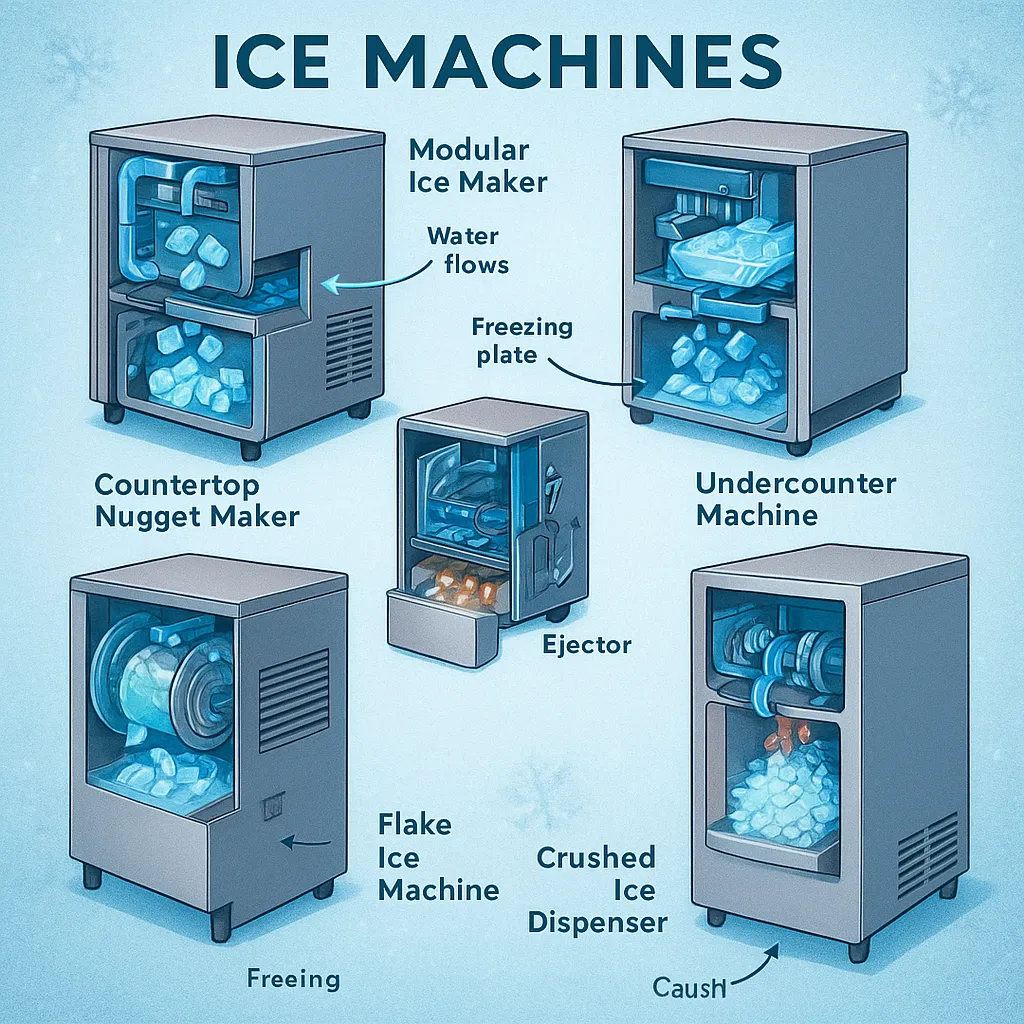

What are the different types of ice machines, and how do they work?
What are the Different Types of Ice Machines, and How Do They Work?
The main types of ice machines include modular, undercounter, countertop, and combination models, which produce different ice forms like cubes, flakes, and nuggets. Each machine type uses unique methods—such as freezing water over evaporator plates or cylinders—to create and dispense ice suited for specific uses in hospitality, healthcare, and industry.
Definition:
An ice machine (or ice maker) is a device that produces ice by freezing water, commonly used in commercial kitchens, hotels, healthcare, and residential settings. Common types include modular, undercounter, countertop, and combination models, each designed for specific outputs and ice shapes.
How Many Types of Ice Machines Are There?
People often ask, “What kinds of ice machines exist?” or “Which ice maker do I need?” Ice machines vary based on size, installation type, and the shape of ice they produce. Here’s a breakdown:
Major Types of Ice Machines
Modular Ice Machines – High-capacity heads, typically placed on storage bins.
Undercounter Ice Machines – Compact, integrated units for under-bar or small kitchen spaces.
Countertop Ice Machines – Small footprint units, mainly for offices and healthcare.
Combination Ice/Water Dispensers – Multi-function, for quick-access self-service areas.
What Types of Ice Do These Machines Make?
Common Ice Types:
Cube Ice – Clear, slow-melting, ideal for drinks.
Flake Ice – Soft, moldable, used in food displays and healthcare.
Nugget (Chewable) Ice – Soft, chewable, popular in healthcare and soft drinks.
Gourmet Ice – Larger, specialty shapes for upscale bars.
How Does Each Ice Machine Work?
Each ice maker design uses a specific freezing process, suited to the kind of ice it creates. Let’s look at how modular, undercounter, and countertop ice machines operate:
Ice Machine Type
Main Ice Type
How It Works
Typical Uses
Modular Ice Machine
Cubes (Full/Half), Gourmet, Nugget
Freezes water on a cold, metal evaporator plate or grid; ice forms in layers and drops into large bins.
Restaurants, hotels, large kitchens
Undercounter Ice Machine
Cubes, Flake, Nugget
Integrates ice maker and storage; uses a compact evaporator to freeze and harvest ice directly into a lower bin.
Bar areas, small cafes, offices
Countertop Ice Machine
Nugget, Flake
Compact units, often using a rotating auger in a chilled cylinder to create soft, chewable ice.
Healthcare, break rooms, waiting areas
Combination Ice/Water Dispenser
Nugget, Flake
Mixes ice making and dispensing for fast, hygienic ice access; frequently touchless operation.
Hospitals, self-service, quick-serve locations
How Do Ice Machines Freeze Water and Separate the Ice?
Regardless of size, most ice machines rely on a refrigeration cycle. Here’s a simple step-by-step overview:
Water is pumped or poured into a freezing chamber (evaporator or mold).
Refrigerant cools the chamber; water freezes into the desired shape.
An internal sensor or timer detects readiness.
Heaters or mechanical harvesters release the ice; cubes drop into the storage bin.
Cycle repeats automatically until the bin is full.
What’s the Difference Among Ice Forms?
Choosing the right ice maker also means considering which ice form best fits your needs. Here’s a comparison:
Full-Cube Ice: Large, symmetrical cubes that melt slowly—great for cocktails and soft drinks.
Half-Cube (Dice) Ice: Smaller pieces fit into narrow glassware and blend smoothly.
Flake Ice: Small, soft flakes ideal for food displays, salads, and packing seafood or med supplies.
Nugget Ice: Soft and chewable, preferred for nursing homes and cold beverage dispensers.
Gourmet Ice: Fancy, slow-melting forms (crescent, sphere, top-hat) for premium drink presentation.
Where Are Different Ice Machines Used?
Another way people ask about ice machines is, “What’s the best ice maker for a bar, hospital, or home?” Here are practical use cases:
Restaurant and Bar Ice Makers: Modular or undercounter machines producing cubes for drinks.
Hotel Ice Dispensers: Freestanding modular units with push/paddle ice dispensing.
Healthcare Ice Machines: Countertop units with nugget or flake ice for patients.
Industrial Ice Machines: High-volume flake or block ice for fisheries, markets, and processing plants.
Home Ice Makers: Compact countertop or fridge-integrated machines for everyday use.
Why Do Some Ice Machines Require Drainage or Special Installation?
Most commercial ice machines need drainage for melted or excess water. Air-cooled, water-cooled, and remote-cooled models also have different installation needs based on efficiency, climate, and available space.
Types of Ice Machine Cooling Methods
Air-Cooled: Uses fans; simple, energy-efficient, but sensitive to heat buildup.
Water-Cooled: Uses cold water to remove heat; better in hot kitchens but uses more water.
Remote-Cooled: Locates noisy/heat-producing parts away from the service area—common in large venues.
FAQ: Common Questions About Ice Machines
What’s the fastest type of ice machine?
Modular machines and some countertop dispensers are fastest, producing ice every 10-20 minutes depending on capacity.
Do all ice machines produce the same type of ice?
No. Different machines are designed for cubes, flake, nugget, or gourmet ice—choose based on your needs.
Is maintenance required for ice machines?
Yes. Regular cleaning and filter changes are needed to prevent scale, mold, and mechanical problems.
Can you use regular tap water?
Most machines can use tap water, but filtered or softened water is recommended for clearer ice and less buildup.
What is nugget ice?
Nugget ice is soft, chewable ice formed by compressing flaked ice into small “pellets,” popular for beverages and in healthcare.
How do you choose the right size ice machine?
Calculate your peak daily use and select a model that produces at least 20-30% more than your busiest day’s requirements.
Are portable ice makers different?
Yes. Portable (countertop) machines make smaller batches, often with simpler controls, and don’t require a water line or drain.
Summary: Picking the Right Ice Machine for Your Needs
To sum up, the main types of ice machines are modular, undercounter, countertop, and combination units. Each uses a specific freezing process to make shapes like cubes, flakes, and nuggets, addressing the diverse needs of restaurants, hotels, healthcare, and households. Understanding how each machine works helps you choose the right ice maker for your space, output demands, and the kind of ice you need.
Related Entities and Concepts:
Ice bins and dispensers
Refrigeration cycles
Air-cooled vs. water-cooled condensers
Water filters for ice machines
Foodservice equipment standards
“`
